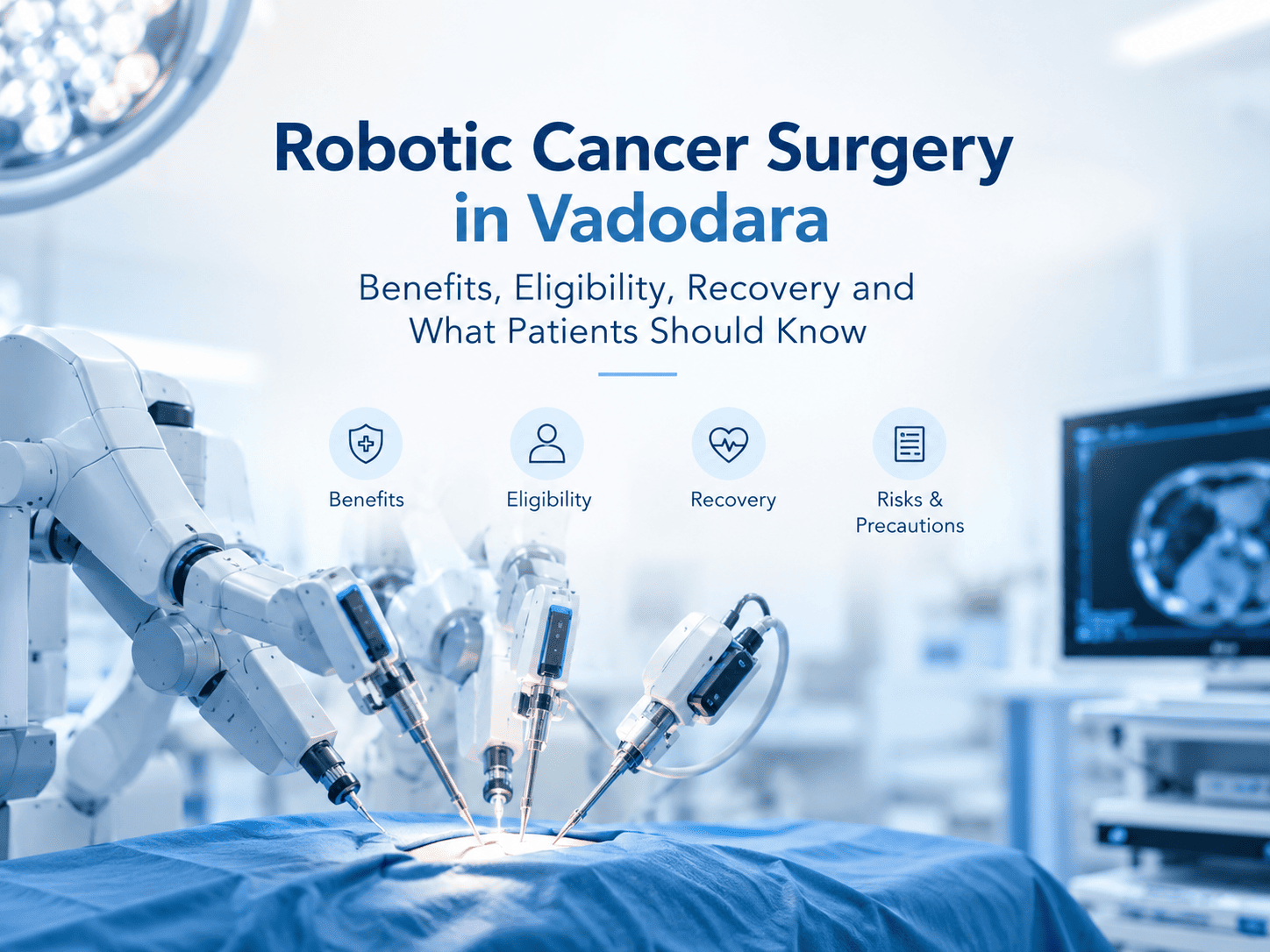

Robotic Cancer Surgery in Vadodara: Benefits, Eligibility, Recovery and What Patients Should Know
A cancer diagnosis often leads to many questions about treatment, surgery and recovery. When surgery is recommended, patients may also hear about minimally invasive and robotic-assisted procedures. But what exactly is robotic cancer surgery, who can undergo it, and how does it differ from conventional surgery?
Robotic Cancer Surgery in Vadodara is an option that may be considered for selected cancer patients when a minimally invasive approach is appropriate. The robotic system does not operate independently. Instead, the surgeon controls the instruments through a console, allowing the surgical team to perform precise movements through small incisions.
The decision to use robotic surgery is made according to the patient’s cancer type, stage, location, overall health and the surgical procedure required.
What Is Robotic Cancer Surgery?
Robotic cancer surgery is a form of minimally invasive surgery in which a surgeon uses a robotic-assisted system to perform an operation through small incisions.
The surgeon controls the robotic instruments throughout the procedure. A high-definition, magnified view of the surgical area can help the surgeon see anatomical structures clearly while performing delicate movements.
Robotic surgery is not a separate cancer treatment by itself. It is a surgical technique that may be used for selected procedures in patients who require cancer surgery.
Cancer surgery may be performed to remove a tumour, help determine the extent of disease, relieve symptoms or, in some situations, support other stages of cancer treatment.
How Does Robotic Cancer Surgery Work?
During robotic-assisted surgery, the patient is placed under the appropriate type of anaesthesia. The surgeon then makes small incisions through which a camera and specialised surgical instruments are introduced.
The surgeon operates from a console and controls the instruments in real time. The robotic system translates the surgeon’s hand movements into controlled movements of the instruments inside the body.
Depending on the procedure, the surgeon may remove the tumour along with a margin of surrounding tissue and, when required, nearby lymph nodes for further examination.
The exact procedure varies considerably depending on the cancer and the part of the body being treated.
What Are the Potential Benefits of Robotic Cancer Surgery?
For suitable patients, robotic-assisted surgery may offer some advantages associated with minimally invasive techniques.
Potential benefits can include:
- Smaller surgical incisions
- Less tissue disruption compared with some open procedures
- Less postoperative pain in some cases
- Reduced blood loss in some procedures
- Shorter hospital stays for selected operations
- Faster return to routine activities in appropriate cases
- Smaller scars
- Enhanced visualisation for the surgeon during certain procedures
These benefits are not guaranteed for every patient. The outcome depends on the type and complexity of surgery, the patient’s health and other clinical factors.
Who May Be Eligible for Robotic Cancer Surgery?
Not every cancer patient is a candidate for robotic surgery.
Eligibility may depend on:
- Type of cancer
- Stage of cancer
- Size and location of the tumour
- Whether the cancer has spread
- Previous abdominal or other relevant surgeries
- Overall health and fitness for anaesthesia
- The complexity of the required operation
- Availability of appropriate robotic surgical expertise and facilities
A detailed evaluation is therefore important before deciding on the surgical approach.
For some cancers, surgery may be an important part of treatment, while other patients may require chemotherapy, radiation therapy, targeted therapy, immunotherapy or a combination of treatments. Cancer treatment is often planned according to the individual’s diagnosis and stage.
Which Cancers Can Be Treated With Robotic Surgery?
Robotic-assisted techniques may be used for selected surgical procedures involving different parts of the body. They are used in some cancer operations involving areas such as the abdomen, pelvis and chest.
The suitability of robotic surgery varies from one cancer to another. Even among patients with the same type of cancer, the recommended surgical approach may differ.
For example, factors such as tumour size, location, stage and involvement of nearby structures can influence whether minimally invasive or open surgery is appropriate.
This is why patients should discuss their individual reports and treatment options with a qualified surgical oncology team rather than choosing a surgical technique based only on the name of the procedure.
Robotic Surgery vs Open Cancer Surgery
The choice between robotic, laparoscopic and open surgery is not simply a matter of choosing the newest technology.
Open surgery involves a larger incision that gives the surgeon direct access to the operative area. Minimally invasive procedures use smaller incisions and specialised instruments. Robotic surgery is one type of minimally invasive approach.
| Factor | Robotic Surgery | Open Surgery |
|---|---|---|
| Incisions | Usually smaller | Usually larger |
| Surgical approach | Minimally invasive | Traditional open approach |
| Visualisation | Magnified camera view | Direct surgical view |
| Instrument control | Surgeon-controlled robotic instruments | Surgeon-controlled conventional instruments |
| Recovery | May be shorter for suitable procedures | Can be longer depending on the operation |
| Suitability | Depends on cancer and procedure | Used when appropriate for the disease and operation |
There is no single surgical approach that is suitable for every cancer patient. The primary goal remains safe and effective cancer treatment.
What Does an Oncosurgeon Do?
An oncosurgeon, also called a surgical oncologist, is a surgeon with specialised training in performing surgical procedures for cancer patients.
A surgical oncologist may assess whether surgery is appropriate, determine the type of operation required and work with other cancer specialists as part of a multidisciplinary treatment plan.
Before recommending surgery, the cancer team may review imaging, biopsy reports, pathology, laboratory tests and other relevant medical information.
Patients should feel comfortable asking their Oncosurgeon in Vadodara about the purpose of surgery, available approaches, potential risks, expected recovery and alternative treatment options.
What Happens Before Robotic Cancer Surgery?
Before surgery, your medical team may perform a detailed evaluation to determine whether you are fit for the procedure.
Depending on the cancer and planned operation, this may include:
- Review of biopsy and pathology reports
- Imaging investigations
- Blood tests
- Assessment of general health
- Anaesthesia evaluation
- Review of existing medications
- Discussion of previous surgeries and medical conditions
Your surgical team should explain the procedure, possible benefits, risks, alternatives and expected recovery before you provide informed consent.
If you take regular medicines, particularly medicines that can affect bleeding, discuss them with your doctor before surgery. Do not stop or change prescribed medicines unless your medical team advises you to do so.
What Is Recovery Like After Robotic Cancer Surgery?
Recovery varies according to the type and extent of cancer surgery.
Some patients undergoing minimally invasive procedures may experience less postoperative discomfort and return to normal activities sooner than they would after certain open procedures. However, recovery cannot be predicted solely from the fact that robotic surgery was used.
After surgery, patients may receive instructions regarding:
- Wound care
- Medicines
- Diet
- Physical activity
- Walking and mobility
- Follow-up appointments
- Warning signs that require medical attention
The surgical team will provide specific instructions based on the operation performed.
Are There Risks Associated With Robotic Cancer Surgery?
Like every surgical procedure, robotic surgery has potential risks.
Possible complications may include:
- Pain
- Bleeding
- Infection
- Blood clots
- Anaesthesia-related complications
- Injury to nearby tissues or organs
- Complications specific to the particular operation
The risks vary according to the cancer, surgical procedure, patient’s health and other factors.
During consultation, patients should ask specifically about the risks associated with their planned operation rather than relying on general information about robotic surgery.
Questions to Ask Your Oncosurgeon Before Surgery
A cancer surgery consultation is an important opportunity to understand your treatment plan.
Consider asking:
- What type and stage of cancer do I have?
- Why is surgery being recommended?
- Is robotic surgery appropriate for my case?
- What are the alternatives to robotic surgery?
- What are the potential risks and complications?
- How much of the tumour needs to be removed?
- Will I need chemotherapy or radiation before or after surgery?
- How long might I need to stay in the hospital?
- What should I expect during recovery?
- What follow-up tests will I need after surgery?
Getting clear answers can help you understand the treatment plan and make an informed decision with your cancer care team.
Why Individual Assessment Matters in Robotic Cancer Surgery
Robotic technology can provide surgeons with enhanced visualisation, precision and instrument control during selected minimally invasive procedures. However, technology alone does not determine whether a patient should undergo robotic surgery.
The right approach depends on the individual’s diagnosis, cancer stage, tumour characteristics, overall health and the expertise available for the required procedure.
If you are considering Robotic Cancer Surgery in Vadodara, discuss your diagnostic reports and treatment options with a qualified surgical oncology team. A detailed consultation can help determine whether robotic, laparoscopic or open surgery is appropriate for your particular condition.
Frequently Asked Questions
Is robotic cancer surgery safe?
Robotic cancer surgery can be safely performed in appropriately selected patients, but it is still a major surgical procedure and carries potential risks. These may include bleeding, infection, blood clots, anaesthesia-related complications and injury to nearby structures. Your surgeon can explain the specific risks for your operation.
Is robotic surgery better than open surgery for cancer?
Robotic surgery is not automatically better than open surgery for every cancer patient. The appropriate approach depends on the cancer type, stage, tumour location, complexity of the operation and the patient’s overall health. Your surgical oncologist can explain which approaches are suitable for your particular case.
How long does robotic cancer surgery take?
The duration depends on the type and complexity of the operation. There is no single standard operating time for all robotic cancer surgeries. Your surgical team can provide a more accurate estimate after evaluating your diagnosis and planned procedure.
How long does it take to recover from robotic cancer surgery?
Recovery time varies depending on the cancer, procedure, patient’s health and whether complications occur. Minimally invasive surgery can allow faster recovery for some procedures, but individual recovery times differ.
Can all cancer patients undergo robotic surgery?
No. Robotic surgery is not appropriate for every patient. Cancer type, stage, tumour size and location, previous treatments, overall health and the complexity of surgery can all influence eligibility.
What is the difference between robotic surgery and laparoscopic surgery?
Both are minimally invasive surgical approaches. In laparoscopic surgery, the surgeon directly controls long surgical instruments through small incisions. In robotic-assisted surgery, the surgeon controls specialised instruments using a robotic system and console. The robotic system does not independently perform the operation.
Can robotic surgery remove a cancer tumour completely?
When surgery is appropriate, the objective may be to remove the tumour along with an appropriate margin of surrounding tissue. Whether complete removal is possible depends on the cancer’s location, size, stage and involvement of nearby structures.
Does robotic cancer surgery mean there will be no scars?
No. Robotic surgery generally uses smaller incisions than traditional open surgery, but incisions are still required. The number and size of incisions depend on the procedure.
How do I choose an Oncosurgeon in Vadodara?
Look for a qualified surgical oncology professional who can explain your diagnosis, treatment options, surgical approach, potential risks and expected recovery. Ask about the specific procedure recommended for your cancer and whether a multidisciplinary cancer team is involved in your care.
Should I get a second opinion before cancer surgery?
A second opinion can be useful when you want additional information about your diagnosis or treatment options. You can discuss your pathology, imaging, proposed surgery and alternatives with another qualified cancer specialist before making a treatment decision.
Conclusion
Robotic cancer surgery is a minimally invasive surgical approach that may be suitable for selected cancer patients. It allows the surgeon to control specialised instruments while viewing the surgical area through an enhanced camera system.
However, robotic surgery is not appropriate for every cancer or every patient. The decision should be based on the type and stage of cancer, tumour characteristics, overall health and the specific surgical requirements.
If you are looking for an Oncosurgeon in Vadodara or considering Robotic Cancer Surgery in Vadodara, discuss your reports, treatment options and suitability for surgery with a qualified surgical oncology team before proceeding.